
Axopar 38 Cross Top Performance Review: Comfort, Control and 52.2 Knots
Putting the Axopar 38 Cross Top to the Test
The new Axopar 38 Cross Top has arrived with big expectations. Replacing one of Axopar’s most successful platforms, the Axopar 37, the new 38 promises more refinement, greater comfort and the same engaging driving experience that has defined the brand.
But how does it actually perform on the water?
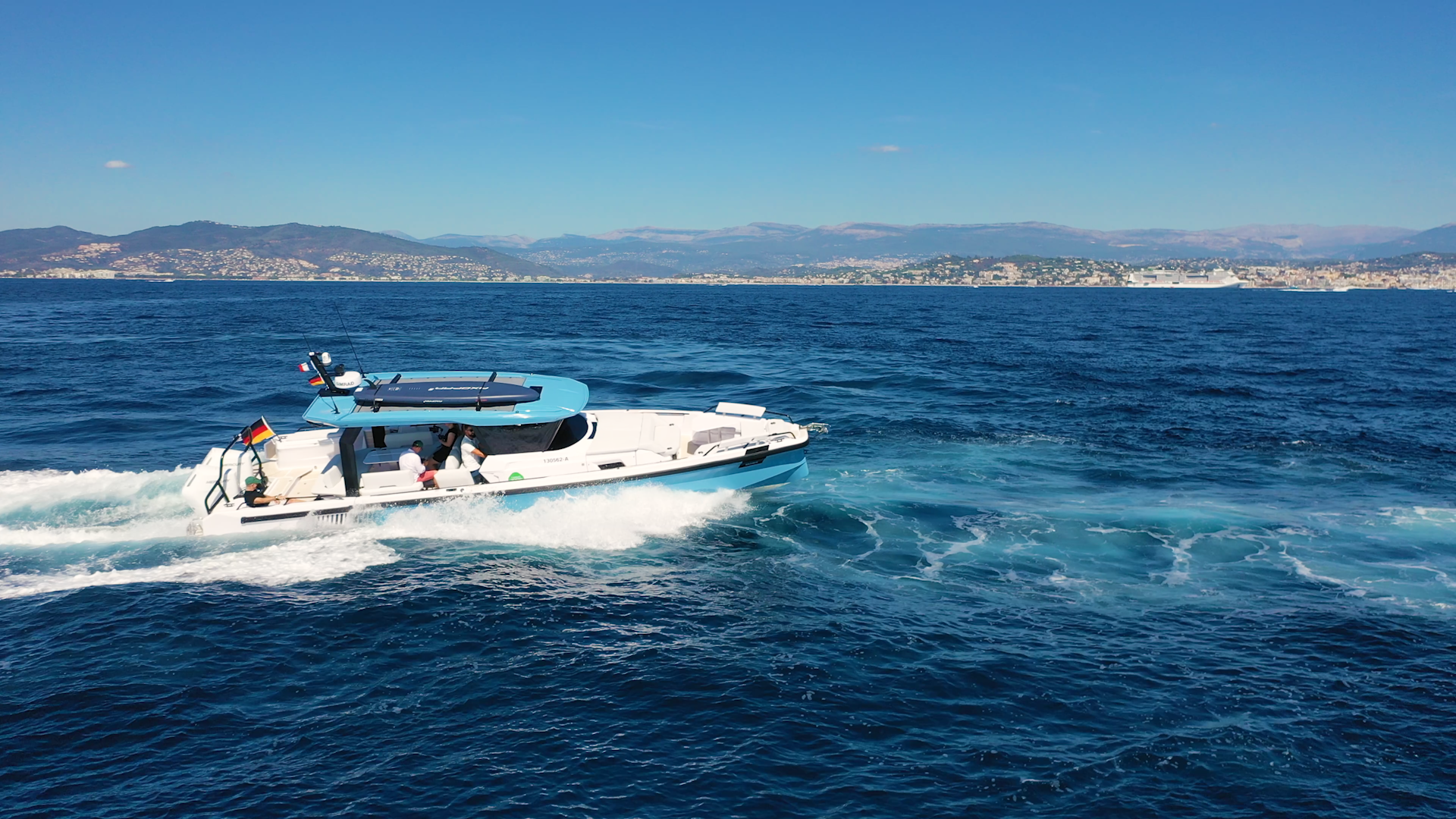
We took the Axopar 38 Cross Top out in the South of France with twin Mercury 425hp V10 Verado outboards to find out. With choppy conditions, plenty of boat wake and an opportunity to push the boat beyond 50 knots, it was an ideal environment for a proper Axopar 38 Cross Top performance review.
And while 52.2 knots certainly makes a statement, outright speed wasn’t what impressed us most.
It was how the Axopar 38 felt getting there.
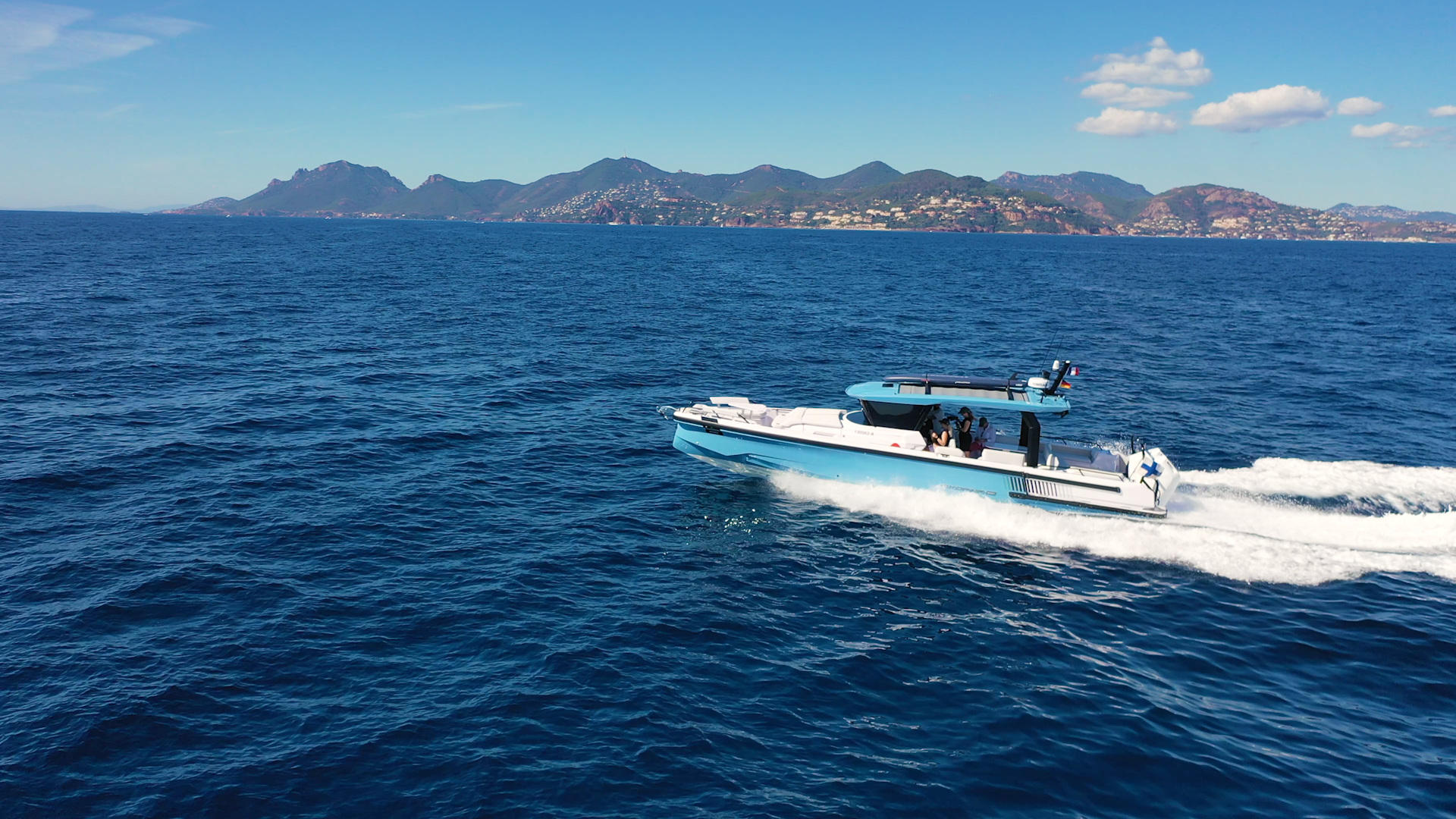
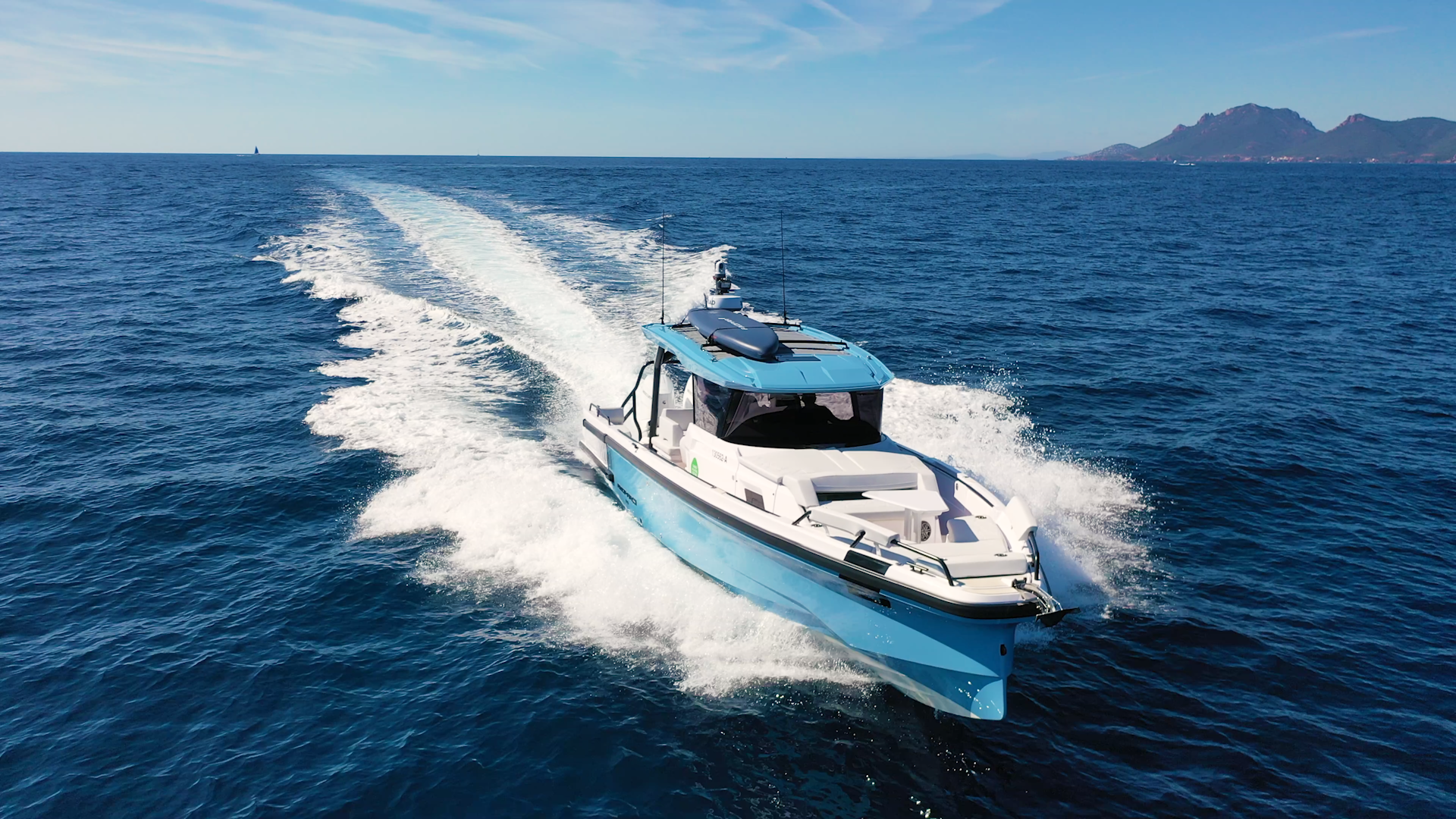
A High Performance Boat That Feels Incredibly Composed
Performance means more than top speed.
A true high performance boat needs to remain predictable and comfortable when conditions deteriorate, respond intuitively to driver inputs and give you the confidence to maintain speed without constantly fighting the boat.
This is where the new Axopar 38 stands out.
Our test took place in moderately choppy conditions with approximately two to three feet of confused chop, plenty of surrounding boat wake and around 15 knots of wind.
Rather than forcing us to dramatically reduce speed, the conditions highlighted the characteristics of the new hull.
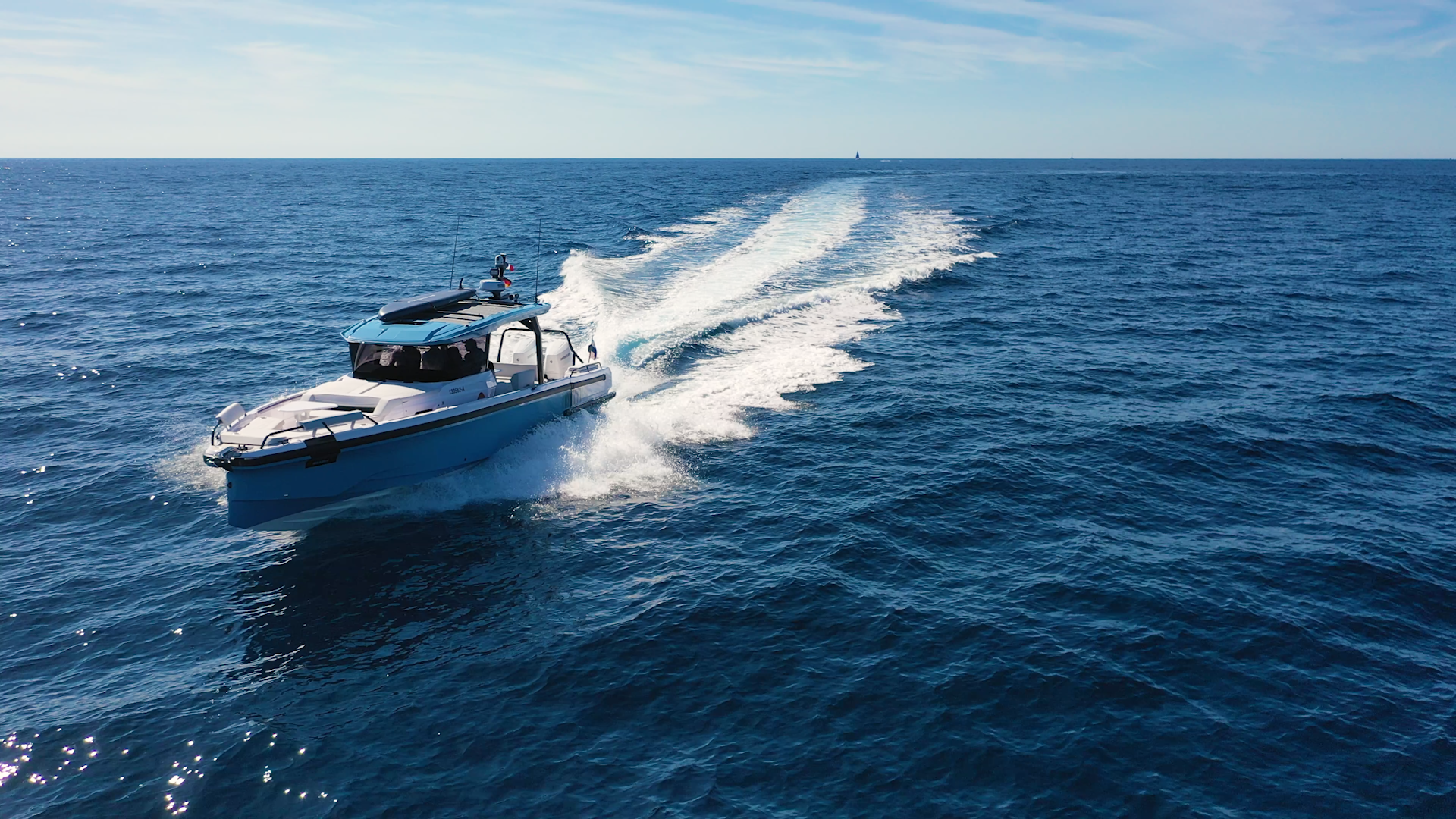
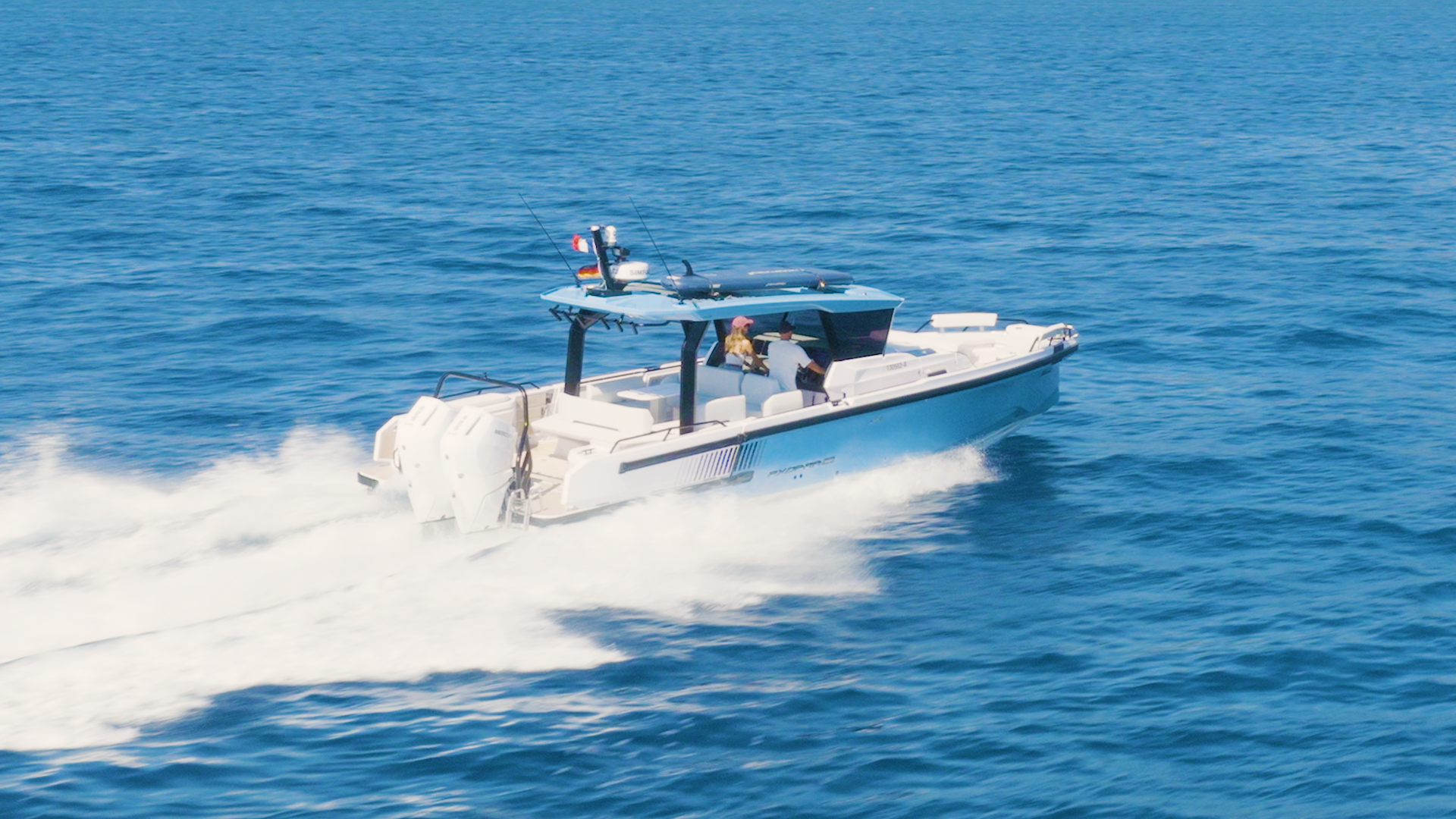
From 25 knots through to 50+ knots, the Axopar 38 Cross Top remained remarkably composed. Bringing the bow down allowed the sharp entry to work through the chop, while the additional weight of the new platform gave the boat a more planted feel through the water.
It feels substantial without sacrificing the agility that makes an Axopar so enjoyable to drive.
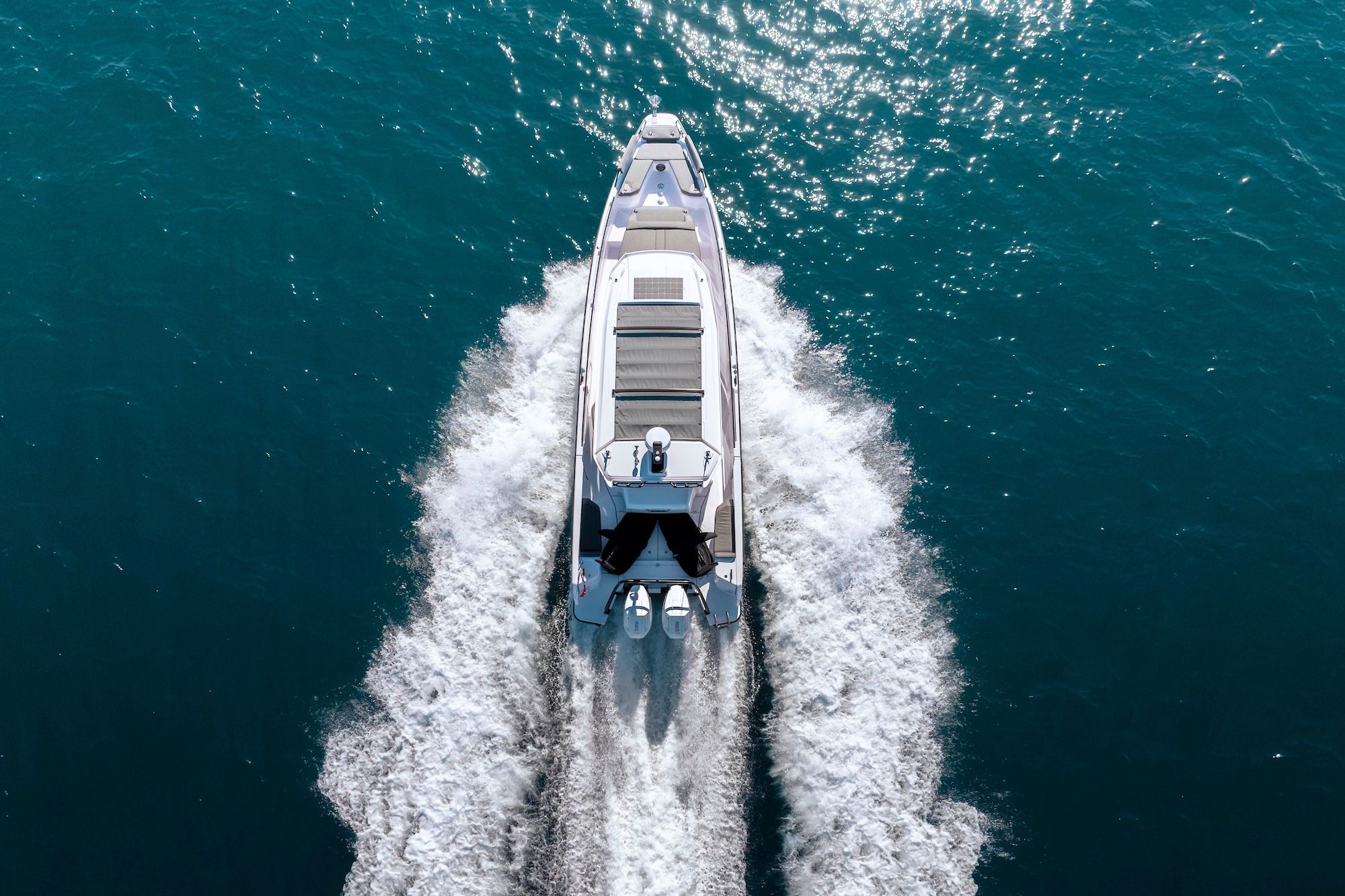
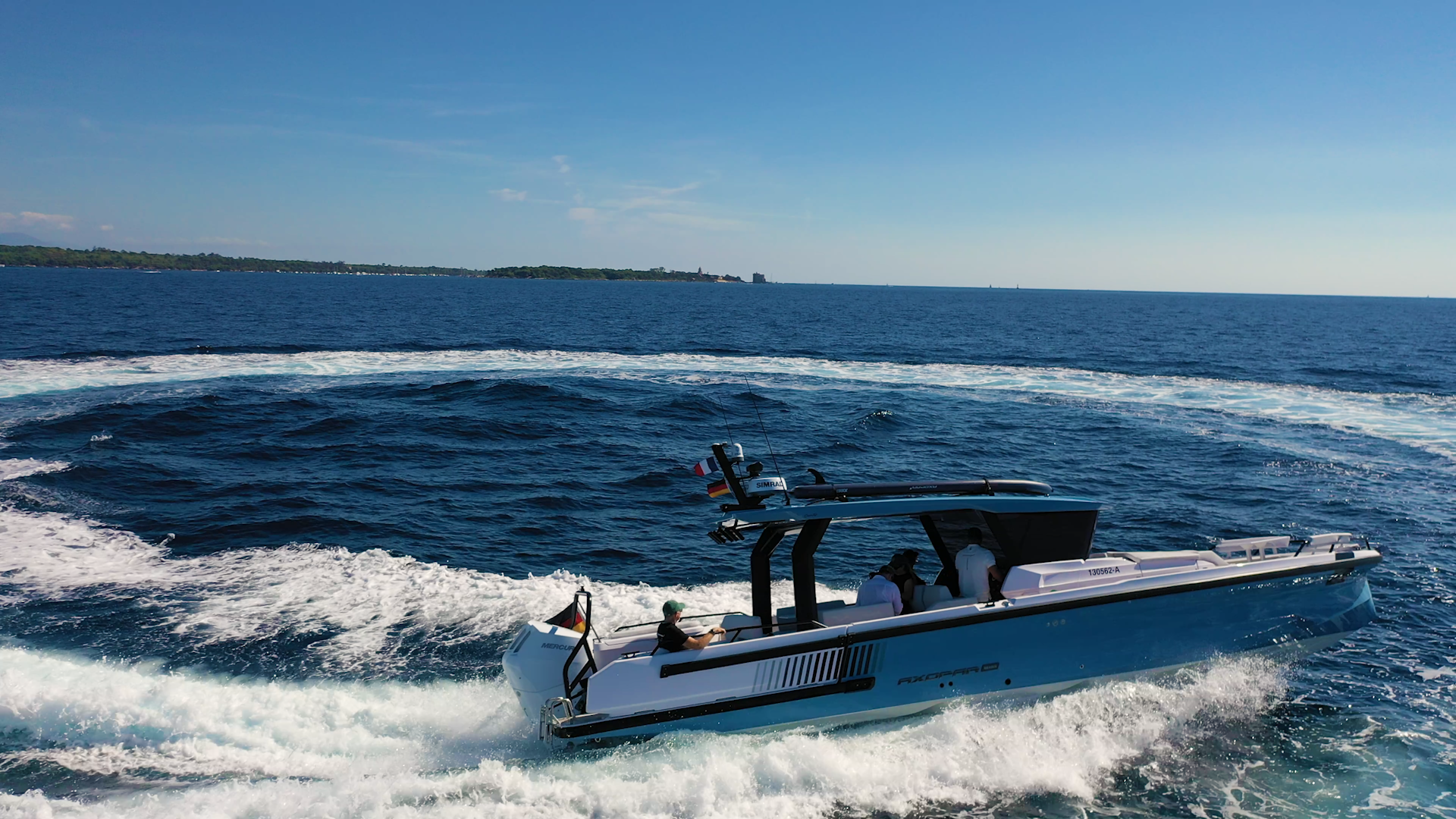
The Axopar 38 Hull Makes the Difference
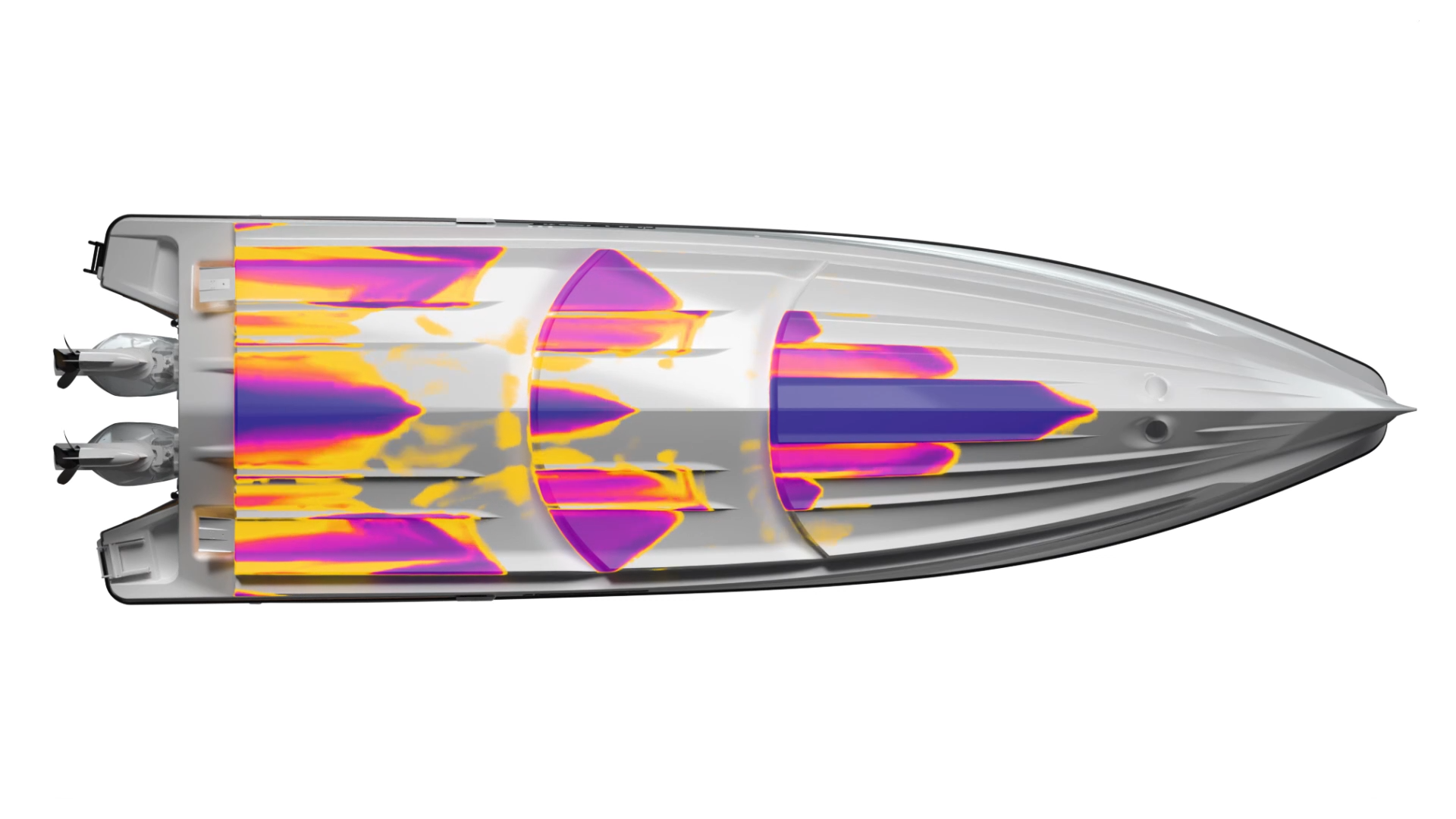
At the heart of the Axopar 38 is a new generation of Axopar’s twin-stepped, sharp-entry V hull.
The Cross Top uses a twin-stepped 20-degree V hull, designed around precise steering, tracking and predictable handling. The hull is paired with a low centre of gravity and carefully managed weight distribution to create a boat that feels balanced underway.
That translates directly to the helm.
In a straight line, very little steering correction is required. Even when travelling at speed through an unsettled surface, the boat tracks confidently rather than wandering beneath the driver.
Push it into a turn and the character changes again.
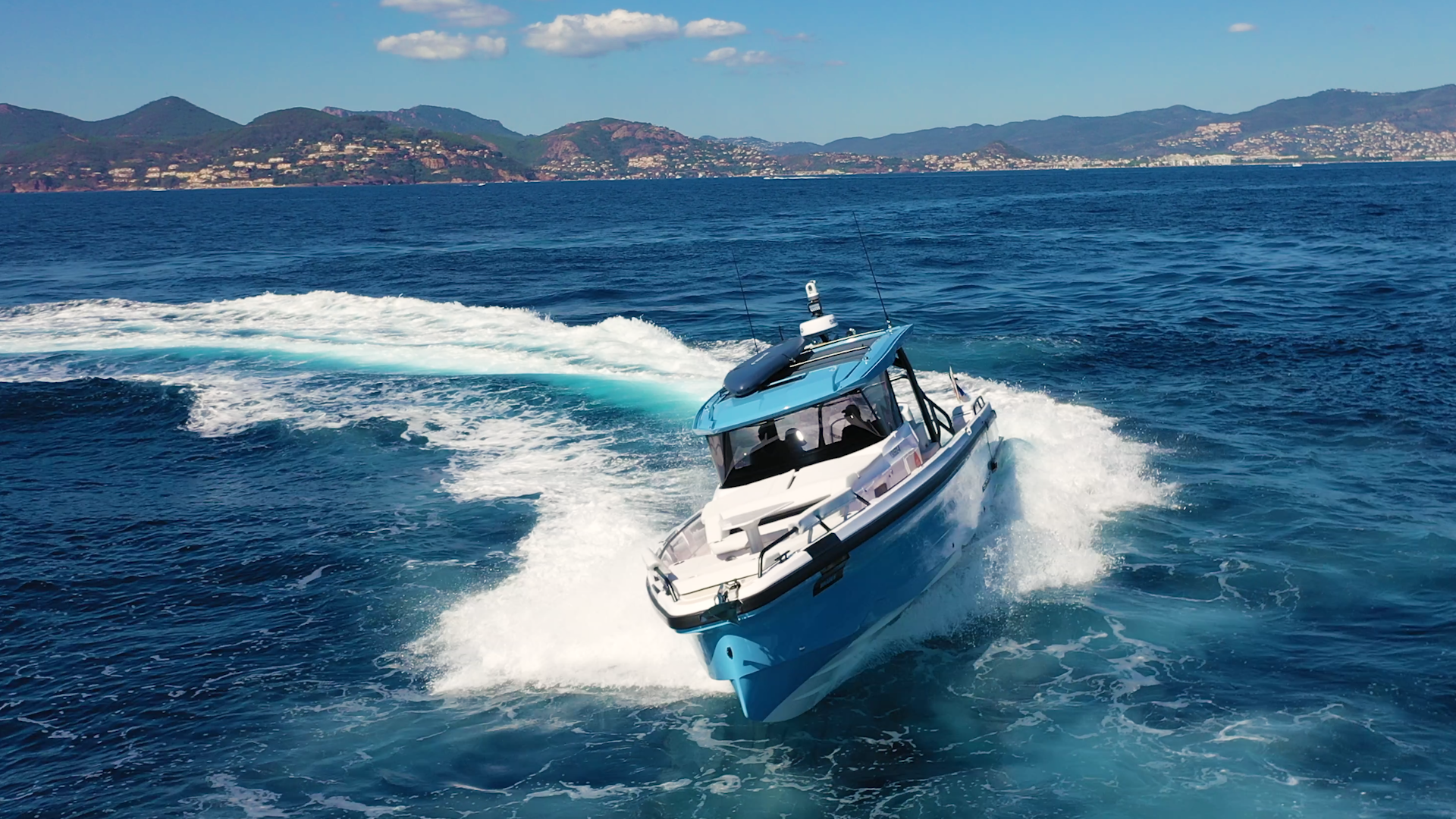
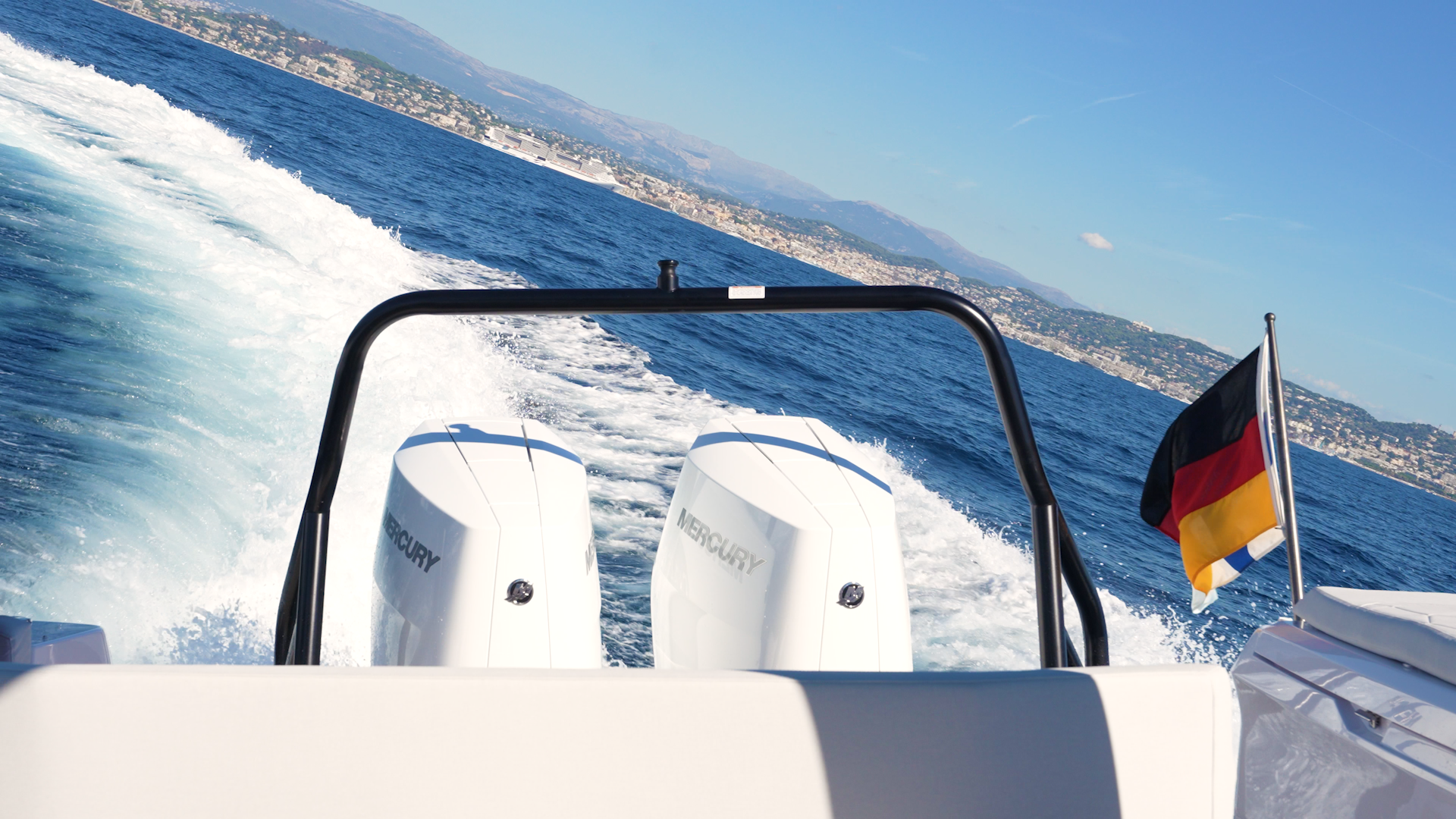
During our boat performance review, we put the Axopar 38 through tight turns at approximately 35 knots. The hull bites into the water and holds its line, allowing the driver to make surprisingly aggressive manoeuvres while the boat remains predictable.
This ability to combine agility with stability is arguably more important than the 52.2-knot top speed.
More Weight, More Refinement
One of the noticeable changes moving from the Axopar 37 to the new 38 platform is the additional weight.
On the water, that translates into a more substantial feeling beneath your feet.
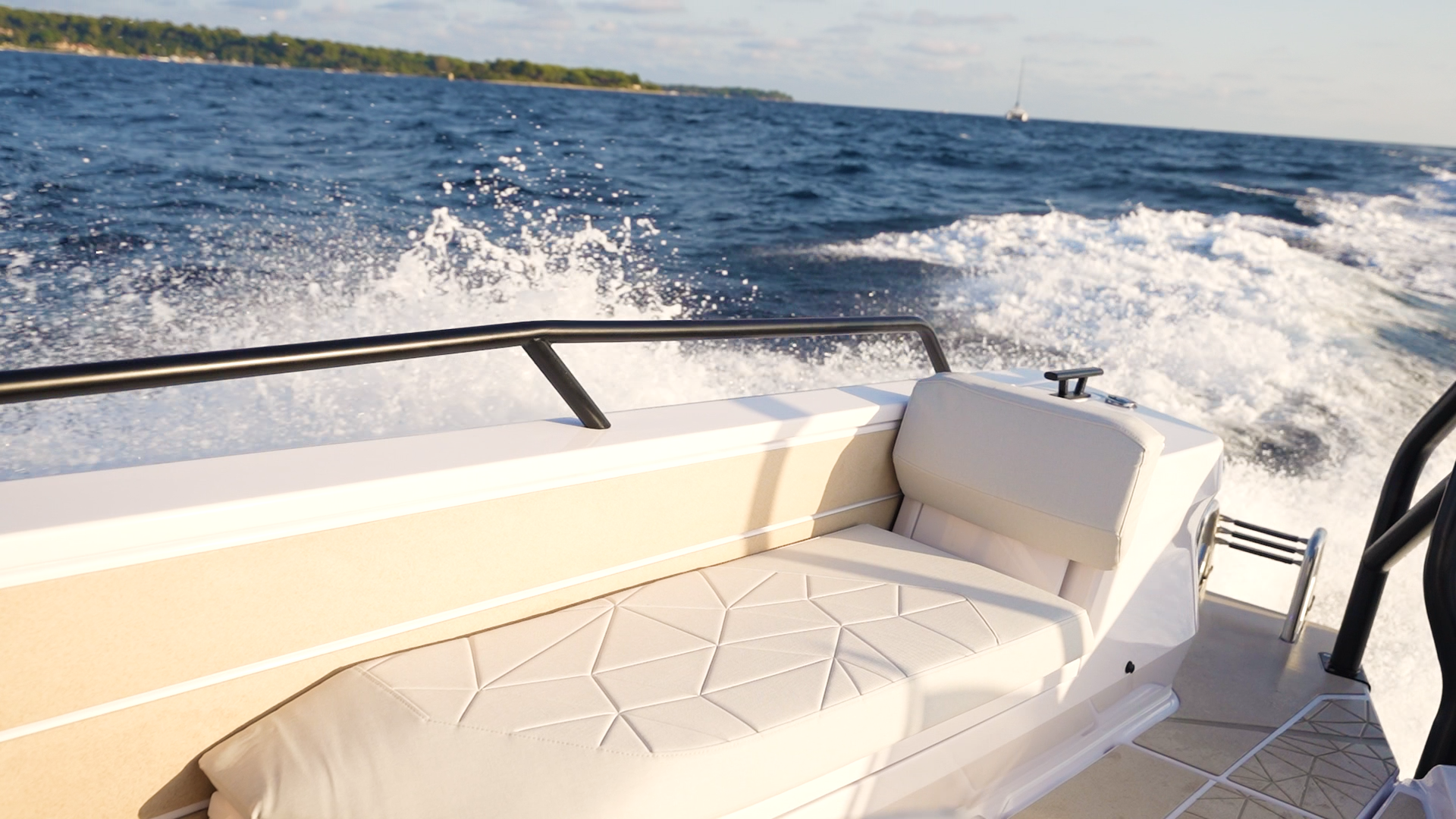
Rather than skipping across short chop, the 38 feels planted as it cuts through the water. Additional attention to hull dampening and sound insulation also contributes to a quieter, more refined experience on board.
It means you still get the responsive, engaging handling expected from an Axopar, but with an added level of maturity.
For passengers, that difference matters.
A boat capable of travelling beyond 50 knots needs to feel comfortable at the speeds owners will actually use. At cruising speeds in the 30-knot range and beyond, the Axopar 38 Cross Top feels settled and reassuring.
Protection Without Losing the Open-Air Experience
The Cross Top configuration adds another layer to that comfort.
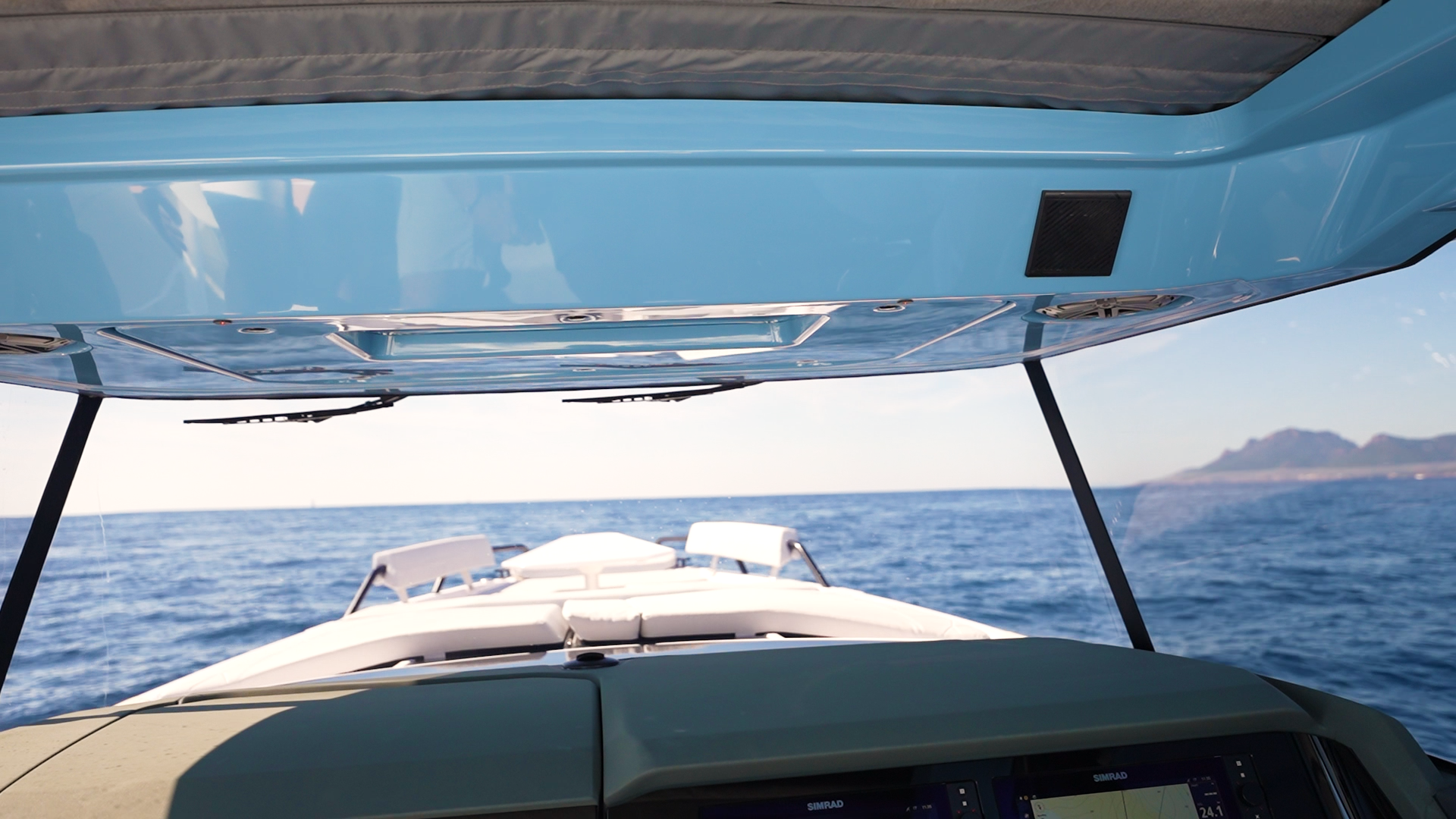
Its distinctive wraparound windscreen provides extensive protection around the helm, while the open aft cockpit and opening roof retain the feeling of an open boat.
During our test, we were travelling into approximately 15 knots of wind, yet the helm remained remarkably protected.
There was no constant blast of wind across the driver and passengers, visibility remained excellent, and the protected environment made sustained higher-speed cruising noticeably more comfortable.
Open the roof and you still have sunlight and fresh air overhead.
For us, this is one of the biggest strengths of the Cross Top concept. You gain much of the protection you want when travelling quickly or when conditions turn, without completely separating yourself from the environment around you.
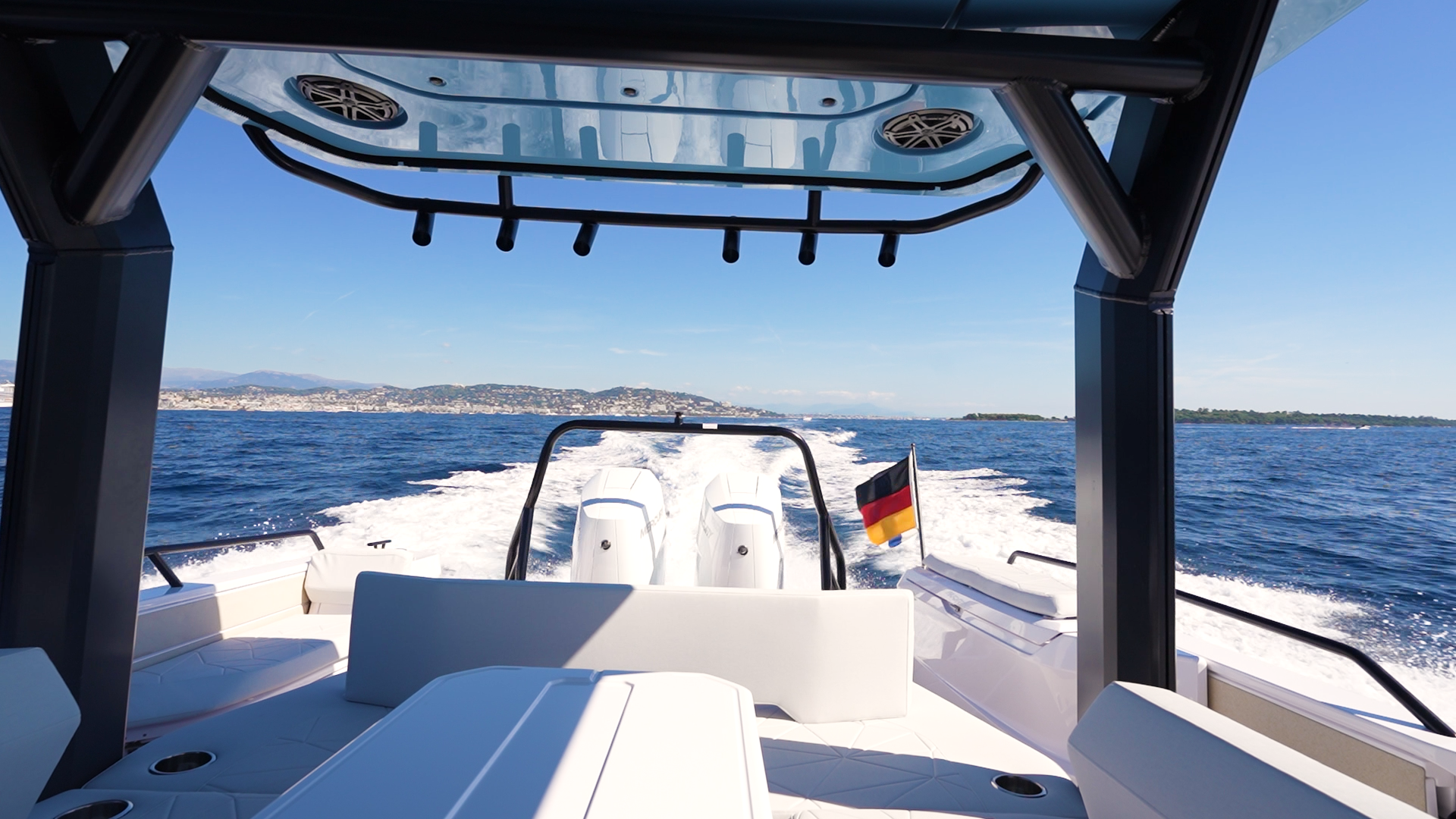
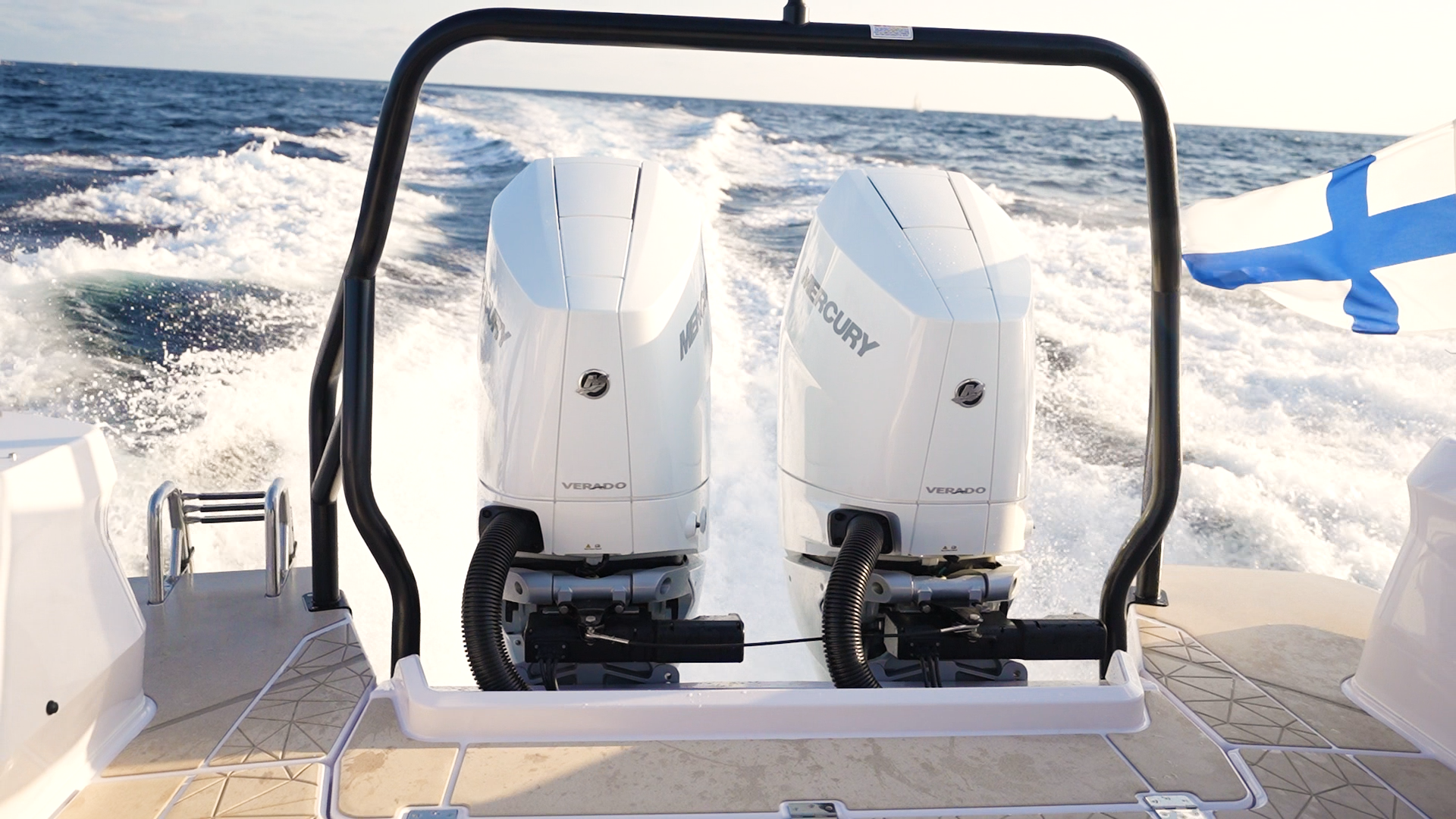
Twin Mercury 425 Performance
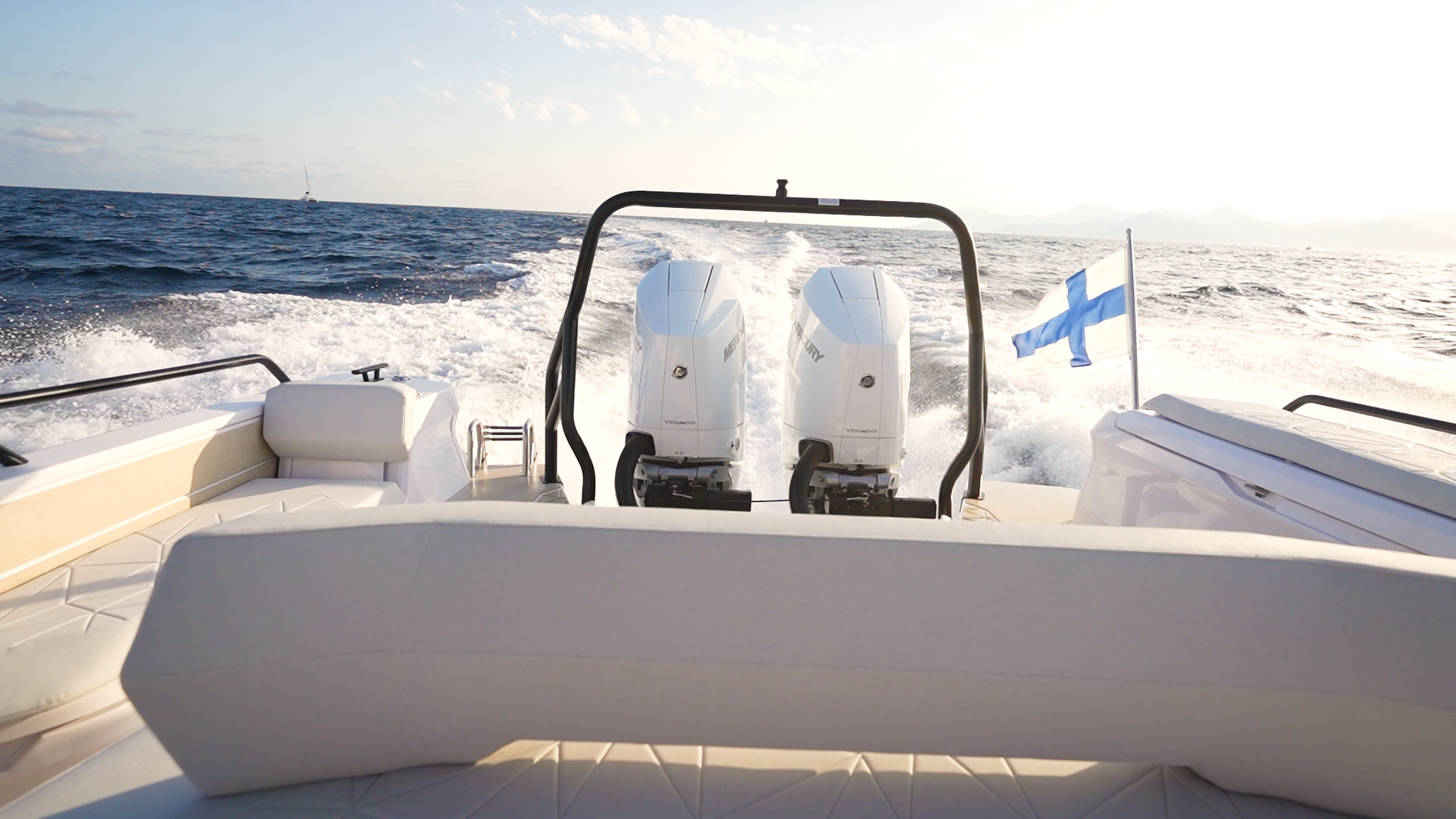
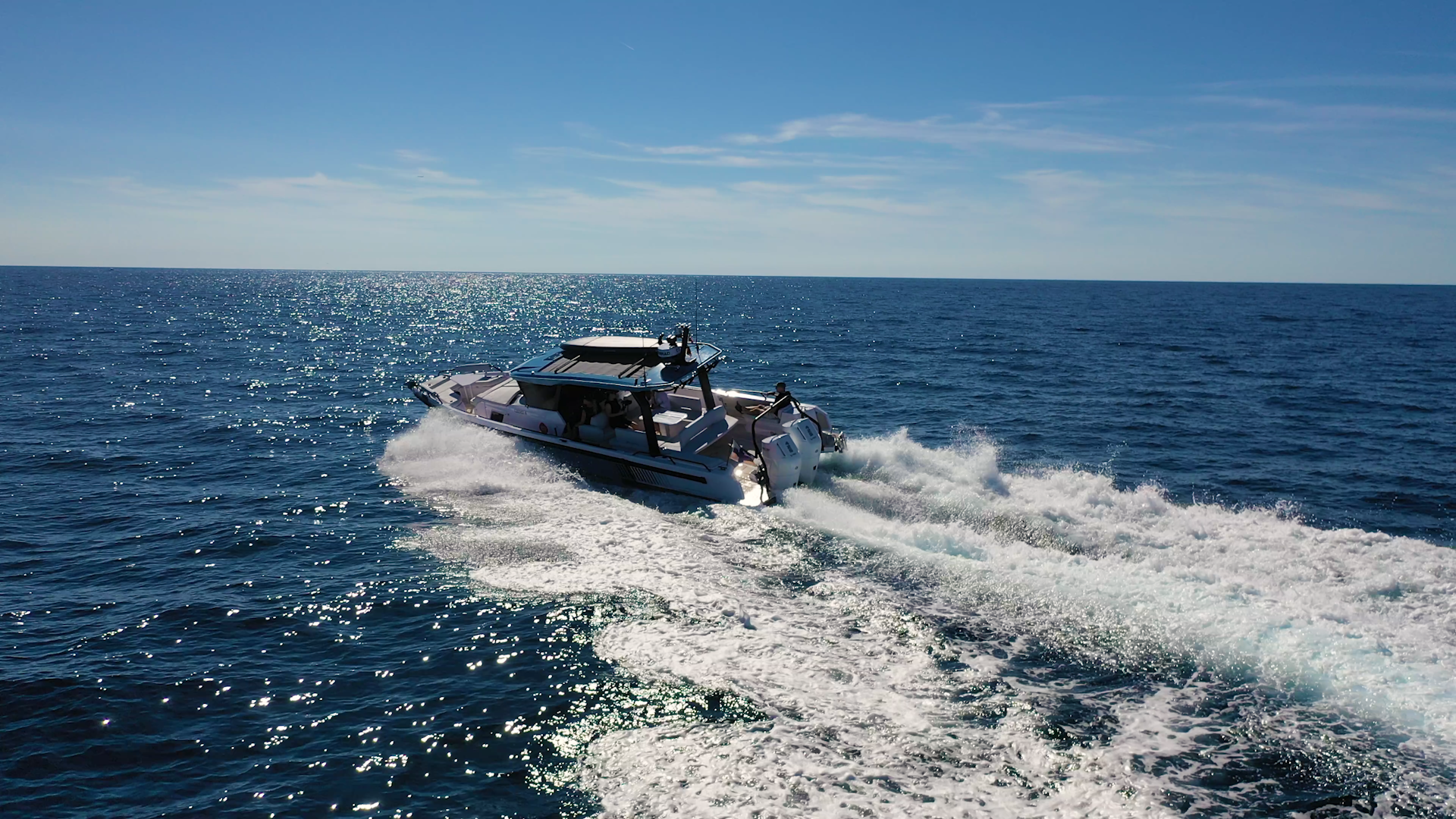
Our test boat was powered by 2 x Mercury 425hp V10 Verado outboards, producing a combined 850hp.
The 5.7-litre V10 architecture produces substantial torque, which suits the heavier new Axopar 38 platform particularly well.
Acceleration is strong with very little bow rise as the boat transitions onto the plane. Instead of waiting for the bow to settle before gaining visibility, the boat remains remarkably level as speed builds.
Continue pushing the throttles and the performance builds quickly.
During testing, we recorded a top speed of 52.2 knots.
That is serious Mercury 425 performance, but the way the power is delivered is just as important. The engines complement the character of the hull, providing the torque to get the boat moving quickly while still delivering the smoothness expected from the Verado platform.
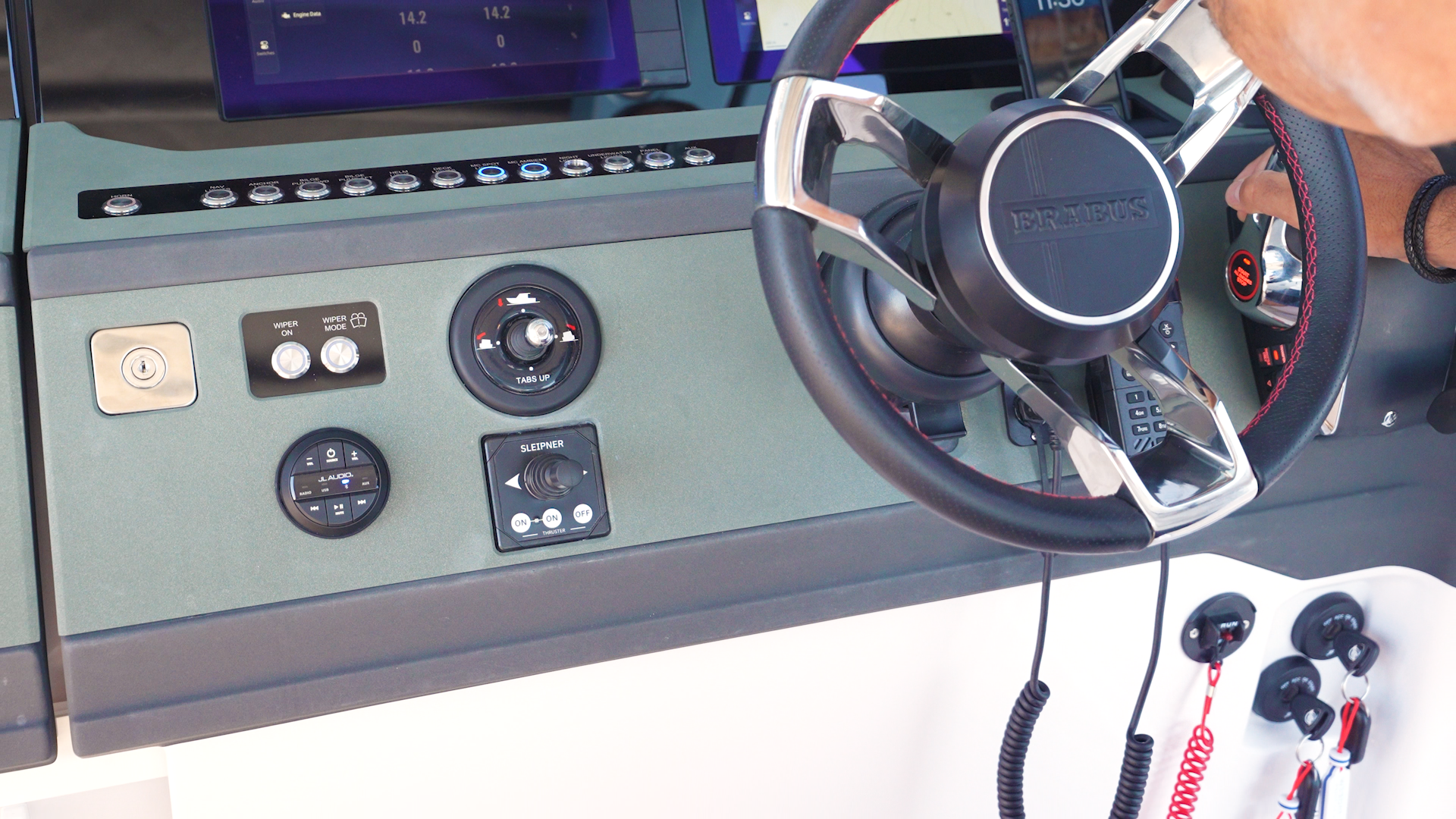
For close-quarters manoeuvring, Mercury Joystick Piloting can also be integrated with the bow thruster, giving the driver greater control when manoeuvring a boat of this size around a marina.
A Helm Designed for Driving
The driving position itself deserves attention in a performance review.
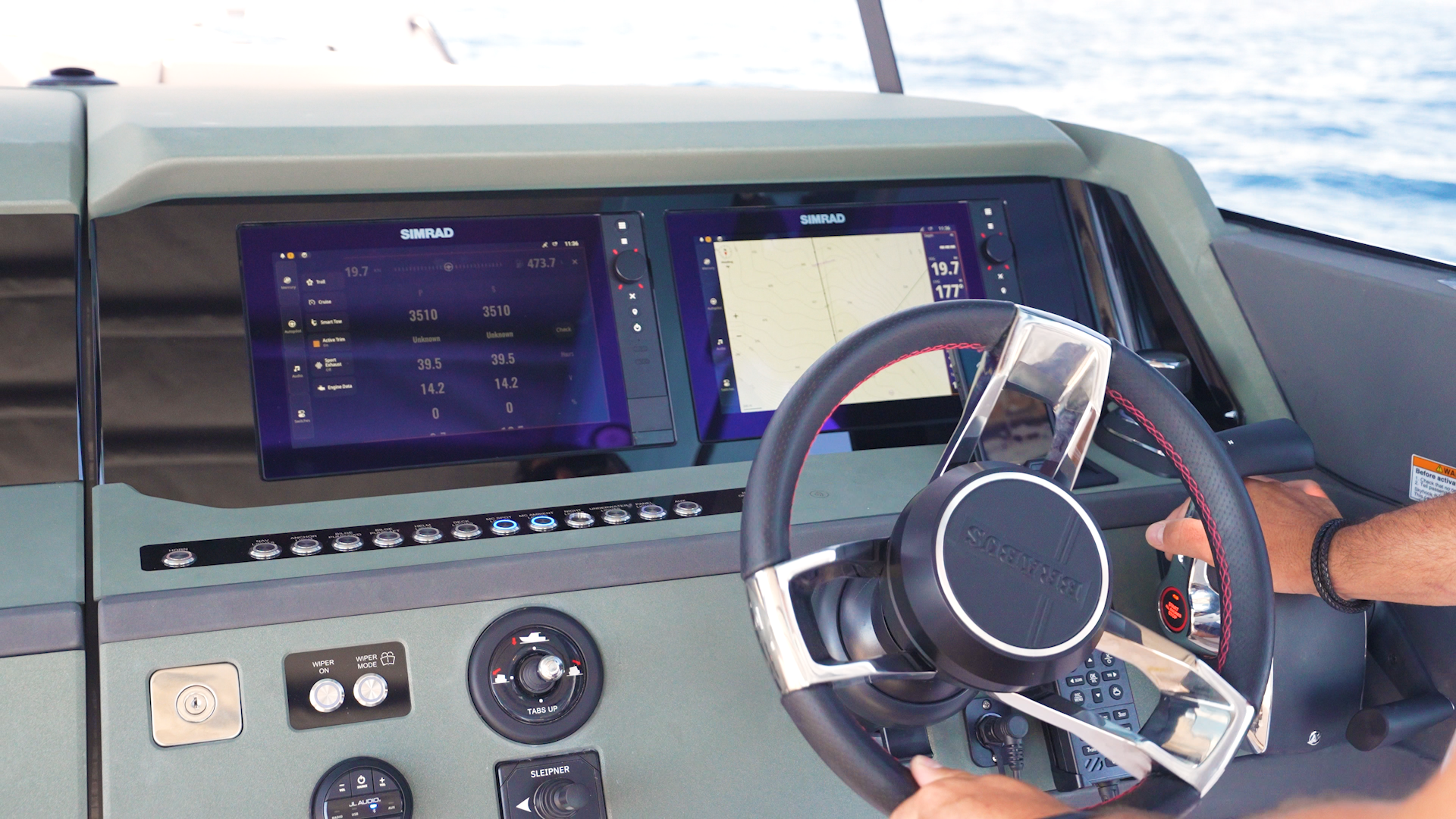
The throttles sit naturally to starboard, roughly in line with the driver’s shoulder, while the wheel and displays fall comfortably within reach.
Visibility is another highlight.
The wraparound windscreen provides a broad field of view forward and to either side, while the open cockpit maintains visibility aft. It creates a driving position that feels protected without becoming enclosed.
These details might seem secondary to hull design and horsepower, but after hours behind the wheel they make a significant difference.
Performance is much easier to enjoy when the driving position feels natural.
Axopar 38 Cross Top Performance: Our Verdict
The headline figure from our test is 52.2 knots from twin Mercury 425hp V10s.
But that isn’t the number that defines the Axopar 38 Cross Top.
What impressed us was the confidence the boat gives you at 25, 35 or 45 knots. The steering is predictable, the hull tracks beautifully, the additional weight gives the boat a planted character, and the Cross Top windscreen makes travelling quickly considerably more comfortable.
Push hard into a turn, and it feels engaging. Point it into confused chop, and it feels composed. Settle into a fast cruise, and it feels remarkably effortless.
That combination is what makes the new Axopar 38 platform interesting.
This isn’t simply an Axopar 37 made slightly bigger and faster. The 38 feels like a more refined evolution of the formula, retaining the responsive driving experience Axopar owners expect while adding greater comfort, protection and maturity.
For Australian boaters in particular, where changing conditions, afternoon winds, offshore runs and long distances can all form part of a day on the water, those characteristics matter far more than a top-speed figure alone.
Frequently Asked Questions
How fast is the Axopar 38 Cross Top and What is the top speed of the Axopar 38 Cross Top?
The Axopar 38 Cross Top is designed as a high-performance adventure boat capable of speeds exceeding 45 knots with its standard engine configurations. During our performance test with twin Mercury 425hp V10 Verado outboards, we recorded 52.2 knots.
What is the best cruising speed for the Axopar 38?
The ideal cruising speed depends on conditions and engine configuration. During our test, the Axopar 38 felt particularly comfortable in the 30 to 36-knot range, remaining composed even through two to three feet of confused chop.
What is the range of the Axopar 38 Cross Top?
Axopar quotes a range of approximately 250 nautical miles in optimal conditions. Actual range depends on engine configuration, cruising speed, fuel load, weather and sea conditions.
How much fuel does the Axopar 38 hold?
The Axopar 38 Cross Top has a standard 830-litre fuel capacity, with an optional 1,000-litre tank available for owners looking for additional cruising range.
What engines are available on the Axopar 38?
Axopar currently lists twin 300hp to twin 425hp outboards for the Axopar 38 Cross Top.
How does the Axopar 38 Cross Top perform with twin Mercury 425hp engines?
With 850hp from twin Mercury 425hp V10 Verados, our Axopar 38 Cross Top test boat reached 52.2 knots. More impressive was the delivery of that performance, with strong acceleration, minimal bow rise and confident handling as speeds increased.
1How does the Axopar 38 handle in rough water?
The Axopar 38 uses a twin-stepped sharp-entry V hull designed to cut through chop while maintaining predictable handling. In confused chop during our test, the boat remained comfortable and composed at speeds of approximately 35 to 36 knots.
What hull does the Axopar 38 use?
The Axopar 38 Cross Top uses a twin-stepped 20-degree V sharp-entry hull. The design combines a sharp bow entry with stepped hull geometry, a low centre of gravity and balanced weight distribution.
Is the Axopar 38 suitable for offshore boating?
The Axopar 38 Cross Top carries a Category B Offshore / Category C Coastal classification, subject to the applicable passenger limits and operating requirements. Its hull design and protected Cross Top helm also make it well suited to boating where conditions can change quickly.
What is the difference between the Axopar 38 Cross Top and Axopar 38 Cross Cabin?
The key difference is protection and enclosure. The Cross Cabin offers a fully enclosed wheelhouse, while the Cross Top combines a protected wraparound windscreen and roof with a more open cockpit environment. Both are built on the same Axopar 38 platform.
What is the difference between the Axopar 38 Cross Top and Axopar 38 Sun Top?
The Sun Top provides the most open experience of the Axopar 38 range. The Cross Top adds a wraparound windscreen and greater protection around the helm while retaining an open aft cockpit. The Cross Top therefore sits between the open Sun Top and enclosed Cross Cabin.
Is the Axopar 38 Cross Top a good boat for Australian conditions?
The combination of a sharp-entry stepped hull, Category B Offshore classification and additional wind and weather protection makes the Cross Top particularly relevant to Australian boating. The protected helm is useful for longer coastal runs and changing conditions, while the open cockpit retains the outdoor experience suited to warmer weather.
How does the Axopar 38 compare with the Axopar 37?
The Axopar 38 is a new-generation platform rather than simply an updated 37. On the water, the additional weight and refinement give the 38 a more substantial and planted feeling, while retaining the responsive handling associated with the previous Axopar 37.